
Strategic Direction
Welcome from the Head of School
At State College Friends School, we believe education should prepare children not only for the next grade, but for a lifetime of thoughtful learning, meaningful relationships, and responsible citizenship. As our world continues to change, our commitment remains the same: to nurture curious minds, compassionate hearts, and the confidence to engage with complexity with integrity.
Learning with Heart in an Age of Change is our roadmap for the next three years. It builds on the strengths that have long defined our school while providing a clear direction for the future. This plan strengthens our academic program, deepens our commitment to Quaker values, supports faculty growth, enhances our middle school, advances our work in human intelligence and thoughtful AI literacy through the MOON® framework, and reinforces the systems that ensure a strong and sustainable school.
This is not a plan for change for its own sake. It is a commitment to making our educational vision more visible, more coherent, and more intentional for every student and every family. We invite you to explore the pages that follow, learn more about our priorities, and follow our progress as we continue to grow together as a learning community.
In Peace,
Pierre Puget
Head of School
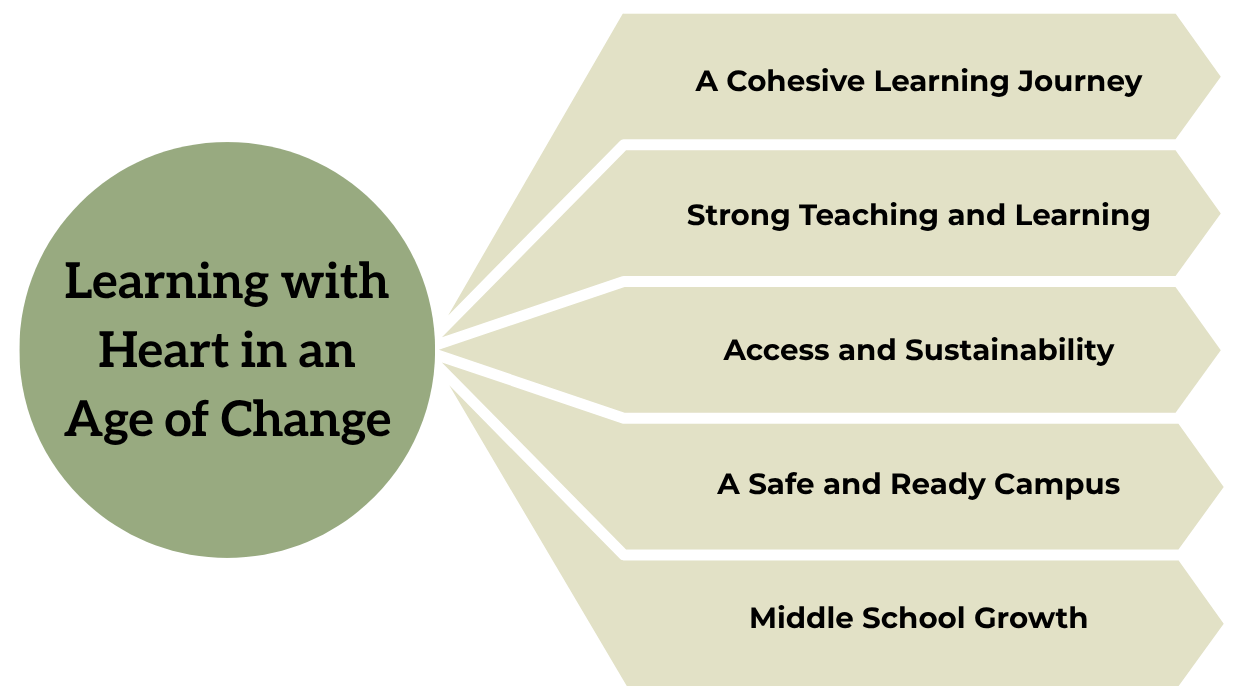
Learning with Heart in an Age of Change reflects how SCFS is strengthening a cohesive, values-guided Pre-K through eighth-grade experience for the years ahead. The plan centers on what students need in order to learn, grow, and participate thoughtfully in a changing world, while also strengthening the teaching, relationships, access, stewardship, and institutional systems that sustain the school. The strategic plan has five focus areas that will become visible across student experience and school life.
Preparing students for change without losing what matters
Children are growing up in a world shaped by rapid technological, social, and environmental change. They need strong academic foundations, but they also need critical thinking, empathy, resilience, reflection, and the ability to take increasing responsibility for their learning.
A Cohesive Learning Journey
Strong Teaching and Learning
Access & Sustainability
A Safe & Ready Campus
Middle School Growth